


Heat Protection
Working Where Heat Is Part of the Process
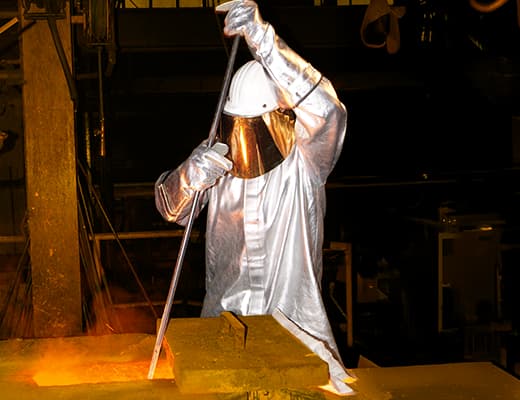
Across steel plants, foundries, glass manufacturing facilities, metal processing units, welding operations, cement plants, and power generation environments, workers routinely perform tasks in the presence of intense heat sources.
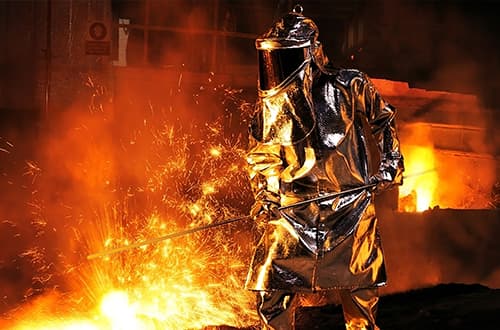
Whether handling molten metal, operating near furnaces, performing hot work, or working around high-temperature equipment, exposure to thermal hazards is often an unavoidable part of the job.
Effective protection begins with understanding the nature of thermal hazards and implementing solutions designed around the specific risks present within the workplace.
Thermal Hazards

Radiant Heat Exposure

Molten Metal Splash
Contact Heat

Sparks & Hot Particles
Open Flame Exposure
Heat Stress & Thermal Fatigue
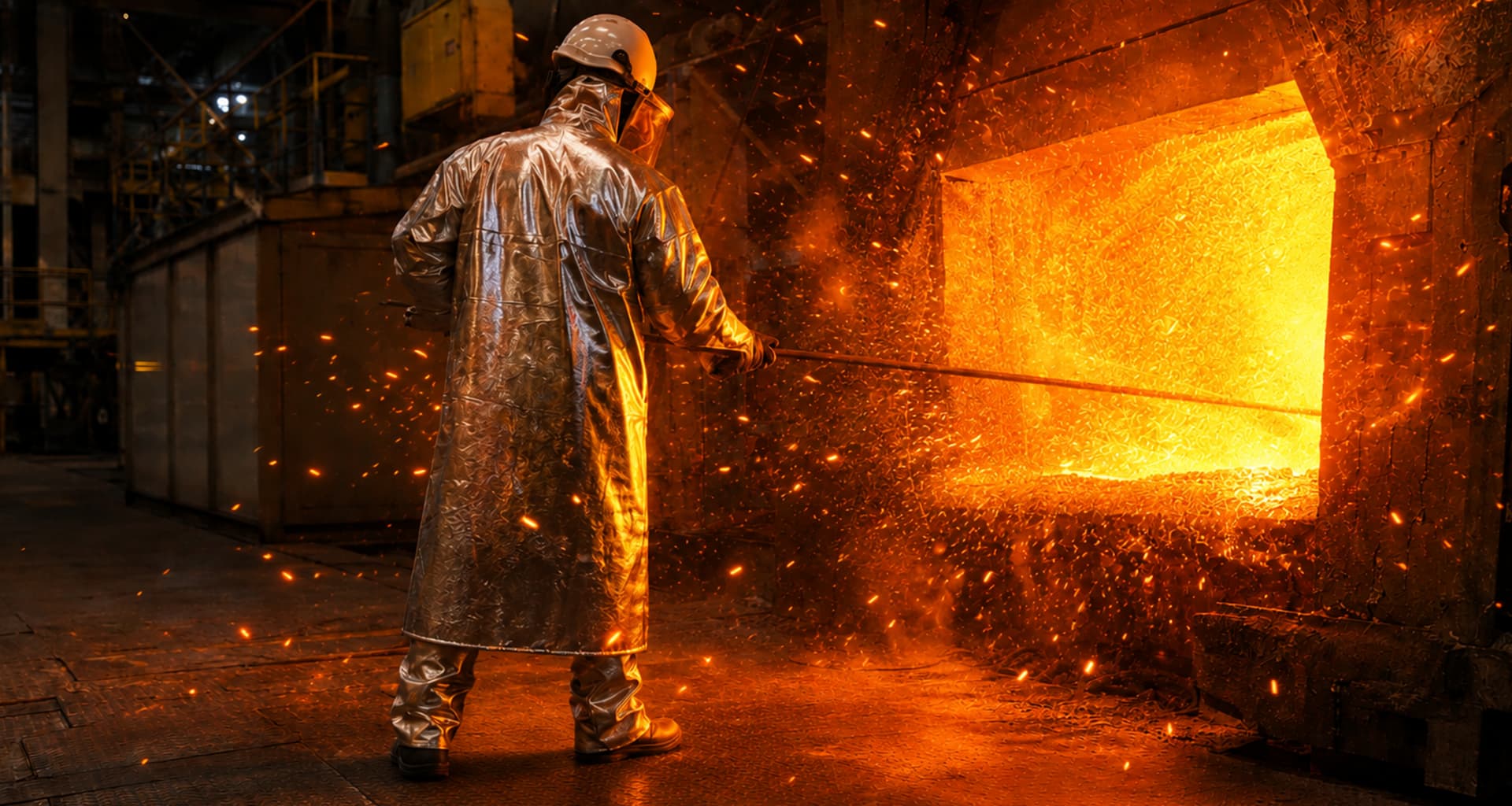
The Impact of Heat Exposure
According to OSHA, millions of workers are exposed to occupational heat hazards each year. Workers continue to experience heat stress, exhaustion, and thermal injuries across industrial environments.
- Burn injuries
- Heat exhaustion and heat stroke
- Worker fatigue
- Reduced dexterity and mobility
- Reduced concentration and situational awareness
- Lost-time incidents
- Reduced productivity
Protection Designed Around the Hazard
Udyogi's heat protection portfolio is designed to address specific workplace thermal hazards encountered across high-temperature industrial environments.
Standards & Performance Classification

Protective Clothing Against Heat and Flame Heat protection garments should be selected based on the nature of the thermal hazard and the level of protection required for the task.
These classifications help safety professionals evaluate garment performance against specific thermal risks commonly encountered in industrial workplaces.
Udyogi Heat Protection Portfolio
Udyogi offers a range of heat protection solutions designed to help organizations manage thermal hazards across diverse industrial applications.